- 12
- 4,210/13,812 ft (at the temple summit)

Adres engellemelerine karşı hazırlanan bahsegel bağlantıları kullanıcıların kesintisiz erişimini sağlıyor.
Let me ask you a question.
Have you ever been to a place that feels unreal, something that feels like a piece of heaven that fell on earth?
So much so that it feels more like out of a fantasy than a real place?
Well, well, well, if so, let me take you on a Badimalika Trek. The ultimate off-the-beaten-path adventure of Nepal.
Scenarios I bet you’ve only seen on your laptop or smartphone screens on social media, shown by your so-called influencers using filters and side-by-side comparisons that say “reel vs real.”
Let’s dive into Nepal, a nation not so small but not so big, still a full-blown package of cultures and landscapes, a landlocked nation with the nearest point to the ocean and 8 of the world’s highest peaks.
Seasons, so varied and vivid that fingers of one palm won’t be enough to count them all. Wilderness, untouched and unbothered by the modern world’s chaos, will feel like you’ve travelled back to the dawn of civilisation.
As you keep your steps moving towards the high ridges of the Bajura district, you’ll get to have a beautiful view of the peaks like Mt.Api and Mt.Saipal, far away from the regular crowded commercial trails of central Nepal.
Whether you are drawn by the mystical allure of the Shakti Peetha, the Janai Purnima festival, or the raw biodiversity of the remote Himalayan backcountry, this camping expedition offers a transformative experience for pioneer travellers seeking silence, solitude, and the authentic soul of the mountains.
The Spiritual Summit (4,214m)
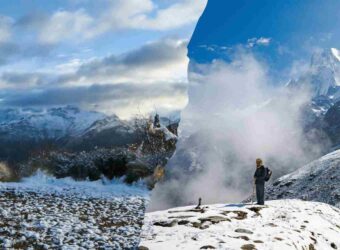
This sacred Badimalika temple is one of Nepal’s most powerful Shakti Peethas. Sitting on a high ridge, offering a top of the world, filled with clouds often floating beneath your feet on the soil of the trek to western Nepal.
The Himalayan Panorama
Nepal, being a mountainous country, wherever you go, you will get to witness a mountain panorama. Similarly, here you will also get to witness the views of Mt.Api and the Saipal ranges. From the summit, you can see deep into the Tibetan Plateau and across the massive white peaks of far western Nepal.
Sacred Confluence at Triveni
Walk around. Explore the Triveni Dham, the holy meeting point of the three rivers. This misty, ethereal plateau serves as a major campsite at the site of deep cleansing rituals for pilgrims.
Untouched biodiversity.
Trek through the calm and serene forests of the Khaptad National Park. It’ll be an experience you’ll remember for the rest of your life. It is a point, a region for the sanctuary of rare wildlife. You will get to see wildlife like the Himalayan Monal (Danphe), a Musk deer and colourful wildflowers that bloom in the neon hues during the monsoon.
Deuda “The authentic Culture of Western Nepal”
An opportunity to experience the raw, living heritage of the Khas people. Unlike commercial routes, you will witness the traditional Deuda dance, listen to local folklore and stay in a village where hospitality is still an ancient sacred duty.
So, we will be starting our journey with a 45-minute flight. From the chaos of Kathmandu to the subtropical plains of Dhangadhi, there will be a landscape shift as you keep flying towards the massive Karnali River. The landscape shifts from urban sprawl to a dense Terai forest.
Spend the afternoon soaking in the humid air of Far-western Nepal, finalising your trekking permits, and enjoying a final night of full city amenities. Dhangadhi serves as the primary logistics hub for serious expeditions to the Bajura district.
It’ll be around a 5-hour drive along the winding Mahakali highway as we leave the plains behind.
And since we are ascending to Dadeldhura, often called the “Queen of the Hills”, the air starts to cool down.
This region is known for the historic Amargadhi Fort, which played a vital role in Nepal’s unification.
From your hotel, you will catch your first distant, simmering glimpses of the Api and Saipal Himal ranges signalling the start of your high-altitude adventure.
So it’s the 3rd day of the trip, and the drive continues through the uneven terrain. We will be passing the confluence of the Budhi Ganga and Malagadh River.
Until we reach Jadanga, we’ll keep going by navigating deep river valleys and terraced hillsides.
This is the official edge of civilisation for the trek. The local culture here remains untouched by mass tourism, offering a rare look at the Traditional Khas lifestyle.
You will spend the night in a basic lodge, falling asleep to the sound of the rushing River
Today, the real trekking begins. The trail is a relentless but rewarding climb through ancient oak and rhododendron forest. You will pass hidden waterfalls and small sheep, and herds of sheep moving deeper into the wilderness of Sudurpaschim.
Budha Krodh is the last permanent settlement you will see for several days.
It’s a beautiful village where the locals still practice traditional mountain agriculture, and it serves as the final gateway to the high Meadows.
It’s already been five days since we started our trip. We passed through “The Queen of Hills”, then Heart of Bajura, and The Vertical Ascent, and now it’s time we step into the finest examples of nature’s architecture.
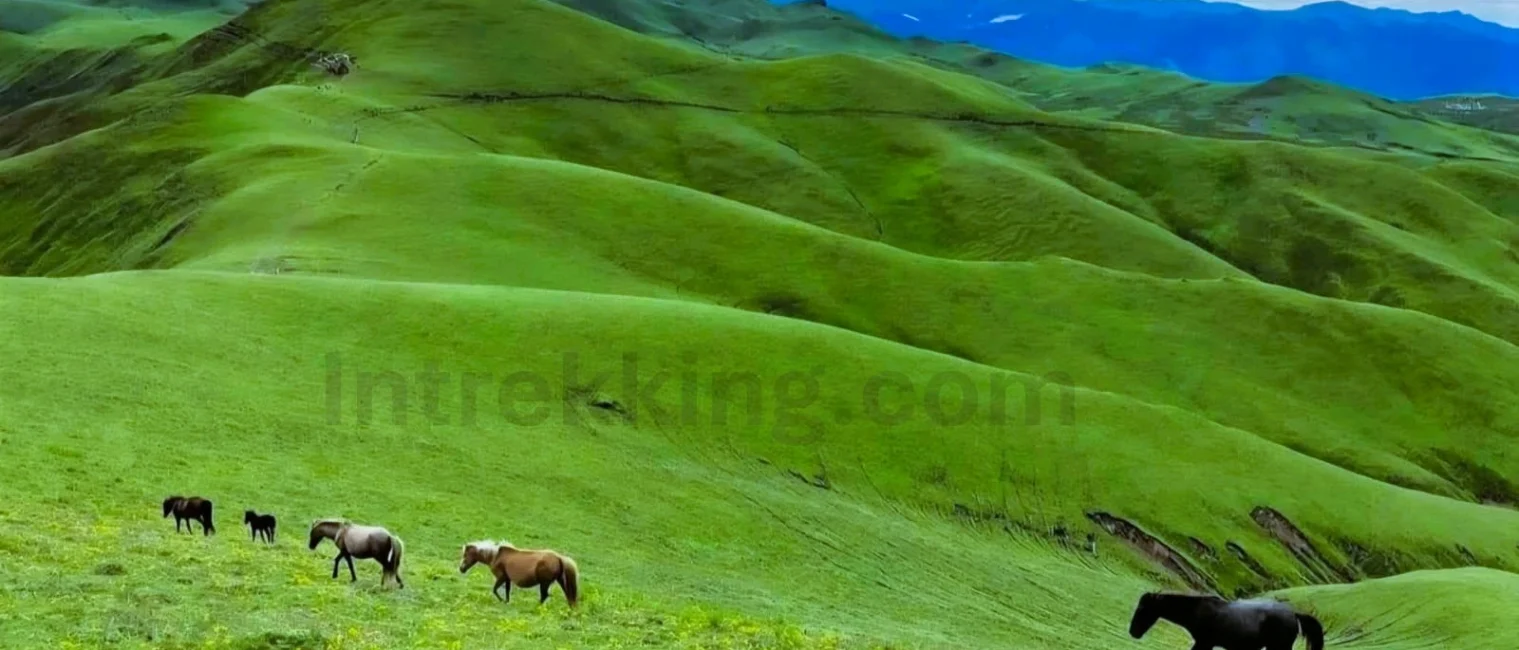
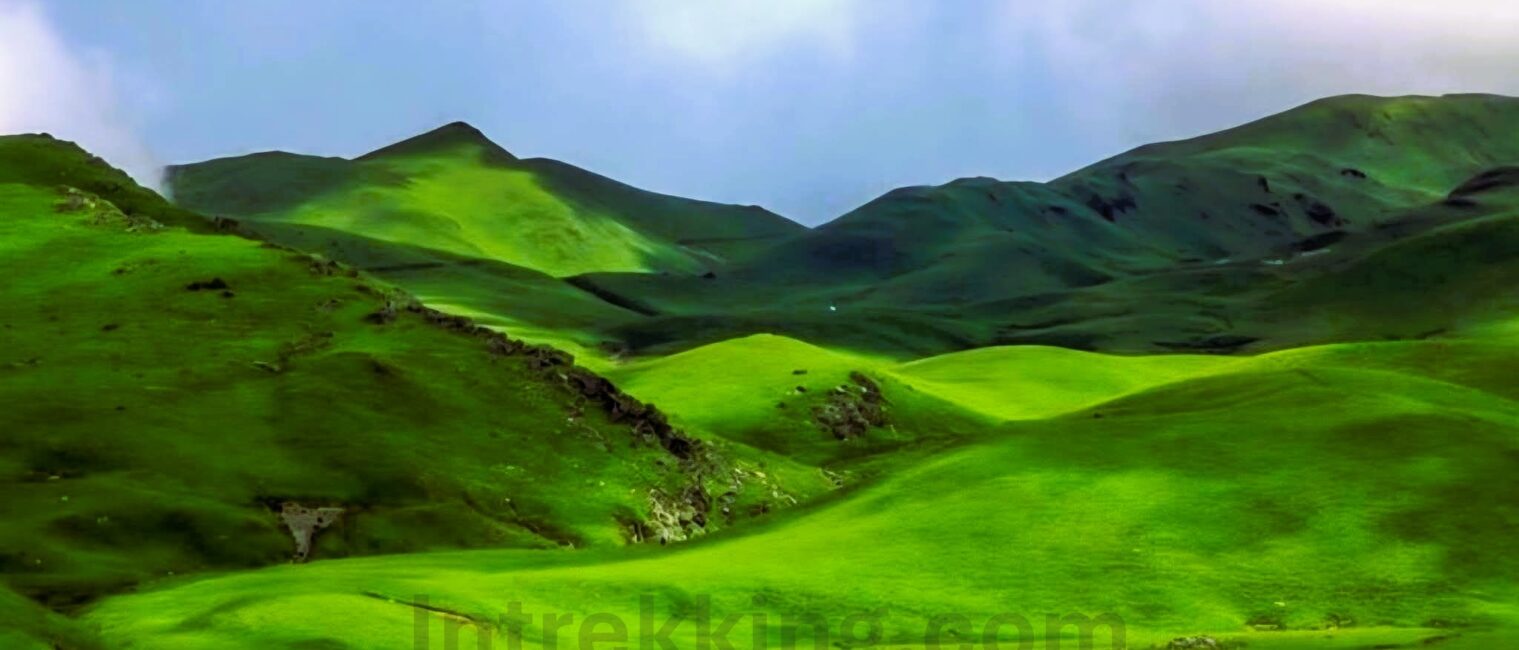
After we break through the treeline, the landscape opens up to the legendary Badimalika Meadows.
The transition is jarring; The dense forest feels like a stretch into Infinity.
If you have ever walked on green grass in the meadows for a morning jog or sat on it for a session of meditation, think of it as such, because the experience feels refreshing.
A soft ground, chilling thin air, just amazing, just wow.
We will be setting up camp at Bhito, surrounded by grazing horses and wildflowers.
An experience of a lifetime in the true solitude of Nepal’s Himalayas.
This right here will be perhaps the most visually stunning day of the trek.
Let me outline why it will be one of the most stunning days. We will hike across the crest of the rolling hills. You’ll feel like you’re walking on the roof of the world.
The destination is Triveni, 3,870 meters, a sacred site where three rivers meet; hence the name Triveni.
During the Janai Purnima festival, thousands of pilgrims gather here. But during the rest of the year, it is a silent, misty sanctuary.
The mist often rolls in over the hills, creating a surreal, ethereal atmosphere. Perfect for landscape photography.
Today we rest. We are at an elevation of nearly 4,000m. The air here will be significantly thinner, and the pressure will be higher. We will take a day for acclimatisation.
We will use this time to explore the hidden corners of the Triveni Plateau, visit the small shrines scattered around the conference, and hike to nearby ridges for a better view of the Western Himalayan peaks.
The silence here is profound; away from any light pollution, the night sky offers a spectacular view of the Milky Way, making it a dream for Astrophotography enthusiasts.
This is the most physically demanding part of the journey, requiring a pre-dawn start.
The climb to the Badimalika Temple (4,200m) is steep and tests your endurance, but the reward is unparalleled.
As the sun rises, the peaks of Mount Api, Saipal and Nanda Devi ignite in the shades of gold.
Standing at the temple, you are at the highest point of the trip, overlooking a sea of clouds and endless green waves of hills; it is a moment of spiritual and physical triumph that a few travellers ever experience, and my friend, you’ll be one of those few lucky ones.
On this 12-day trek, we have experienced highs and lows and seen places that feel like a fantasy world.
Imagine a place so surreal that it feels handpicked right out of a fairytale, a place with elevation so beyond that when you reach the top of the hill, the clouds move around your feet.
Sounds like a Hollywood movie set, doesn’t it?
It’s not just fantasy but also a deep whispering embrace of the wilderness following the spiritual high of the mountain.
We’ll be descending from the high ridges, moving from the open alpine tundra into thick forests that feel like they have been standing there since the dawn of humanity.
Our destination is the Dhawalpur Lake, a hidden turquoise gem tucked away at 2,556 meters.
A natural sanctuary where the only sounds are a rustle of leaves and distinct bird calls.
We will set up camp by the water, giving your legs a much-needed break and your soul a chance to process the spiritual tax you paid to reach the peak.
This day is all about completing the spiritual circle of the journey. This part is relatively short but deeply meaningful, with a trek that brings you to the spiritually significant Natyashwori Temple, often described as the “celestial dance floor of the gods”. Local tradition dictates that your pilgrimage isn’t truly finished until you pay your respects here. If Badimalika is the crown of the mountains, Natyashwori is its heartbeat.
The temple itself is a great example of Pagoda-style architecture dedicated to the Goddess Bhagwati, and it feels like a soft landing after the wildness of the high-altitude meadows. You will have plenty of time to explore the stone courtyards.
Walk around, take in the cold breath of the air at the high altitude meadows.
You will have plenty of time to explore the storm courtyards. Witness the deep-rooted Sudurpaschim traditions, and reflect on your transformation before we head towards the settlement of Lamagadh. It is a day of cultural immersion that reminds you that in this part of the world, every stone and every trail has a story to tell.
This is the final part of your trek before you give closure to this chapter of your life, as it brings you back to the riverside town of Mourya.
From here, we will be boarding a vehicle for a long drive back to the busy streets of Dhangadhi.
It is a day of reflection as you watch the mountain fade into the rear-view mirror. Back in Dhangahdi, a hot shower and a traditional Thakali meal will feel like absolute luxury after a week in the wild.
The trip has come to an end, and we will be heading back to Kathmandu on a flight in the morning. When you look out at the Himalayan chain, you will realise you have just completed one of the most exclusive trekking routes in Asia.
The return flight to the capital will not just be with photos, but with the perspective that only comes from visiting a place where time has truly stood still.
Public transportation during the trip.
Flight from Kathmandu to Dhangadhi
Three meals during the trip (breakfast, lunch, dinner)
Permits (TIMS card)
2-night hotel accommodation in Kathmandu.
Tea house accommodation during the trip.
Insurance (Guide and Porter)
First aid kit
Well-certified English-speaking trekking guide (other languages available too)
One porter for every two trekkers, usually carrying 20 kg maximum.
Staff’s accommodation & meals
Equipment (for staff member)
Staff salaries
All applicable government taxes, charges and service fees.
Trekking Completion certificate.
International flights (to and from Nepal)
Nepal Visa fee (Payable upon arrival at Tribhuban International Airport)
Meals in Kathmandu.
Personal expenses.
Snacks & drinking beverages.
Travel insurance high altitude emergency (Helicopter evacuation)
The extra accommodation.
Let’s talk about the foundation, the pillar of the trip, better to call them the backbone of the trek, the Guide and Porter.
The Guide and Porter on the Badimalika trek are like any other trip; they are the ones who ease you with assistance, providing support for the load and the guidance.
Securing permits for the Badimaika trek in today’s time requires a bit of coordination as this route crosses through national park and local municipal jurisdictions.
It’s just a mandatory guide rule strictly enforced this year; most of these will be handled by your trekking agency, but here is a breakdown of where and how they are issued.
You will need three specific documents for this route.
This is the primary trekking permit used by the government for tracking records for safety and rescue.
It is issued by the Nepal Tourism Board (NTB) office in Kathmandu (Bhrikutimandap) or Pokhara (Lakeside).
You’ll need the assistance of a trekking agency, as a solo trekker cannot issue it; your registered trekking agency must apply for an e-TIMS on your behalf.
The cost for a foreigner is NPR 2,000 (~$15)
SAARC Nationals: NPR 1,000 (~$7.50)
Nepali citizens: Free (registration only)
Since the Badimalika trail often touches or enters the boundaries of Khaptad National Park, this permit is required to pass through the protected forest zones.
You can issue it in Kathmandu at the National Tourism Board office or on the trail at the park entrance gate, though it is safer to get it there in Kathmandu to avoid delays.
Cost per entry: Foreigners NPR, 1500. (~$12) + 13% VAT
SAARC Nationals: NPR 500 (~$4) + 13% VAT.
Nepali Citizen: NPR 100.
This is a relatively newer fee ( Similar to the one in the Everest region) that was directly to the Bajura district for the trail maintenance and local infrastructure.
Where to issue this? Paid at the local checkpoint in Jadanga or Martadi (Bajura) as you enter the trekking region.
Cost approximately NPR $2000 ($15) for foreigners and a nominal fee or free for locals.
Since the upper reaches (Triveni and Badimalika) often lack permanent lodges, you must be self-sufficient or hire a crew that provides a four-season tent. Winds on the ridges are notoriously high.
A -15°C sleeping bag: Even in spring, night temperatures at 4000 meters drop below freezing.
Water purification: There are a few shops for bottled water; you will rely on natural streams.
The “Silent” challenge: Altitude
Unlike the Everest trek, which has a gradual incline, Badimalika involves “staircase” elevation gains. Day 04, for example, jumps nearly 1,500 meters in a single day. Drinking 4+ litres of water daily and taking the Triveni rest day is not negotiable.
The weather fluctuates from humid plains to freezing alpine ridges, so it’s advised for you to wear thermal layers and windproof jackets along with woollen scarves to protect yourself from freezing wind.
Start with a moisture-wicking base layer that pulls straight away from your skin during the steep staircase climbs to prevent the “Chilling effect” when you stop.
Follow this with an insulating mid-layer, such as high-loft fleece or a lightweight down puffer jacket, designed to trap your body heat in the thin air of Triveni.
Finally, cap it with a technical shell, a windproof and waterproof outer layer. On the exposed regions of Badimalika. The wind can be a “silent” energy thief, high-quality hard shells that act as your shield, keeping the warmth in the mountain gales out.
The Badimalika Temple isn’t just a destination; it’s a physical and spiritual peak. As one of Nepal’s 51 sacred Shakti Peethas, the Temple sits atop a lonely, high-altitude ridge that makes you feel like you are standing on the roof of the world.
Reaching this point is a transformative experience where the thin air is filled with ancient myths, and the view from the top, often looking down onto a vast ocean of clouds, is a powerful reminder of nature’s scale.
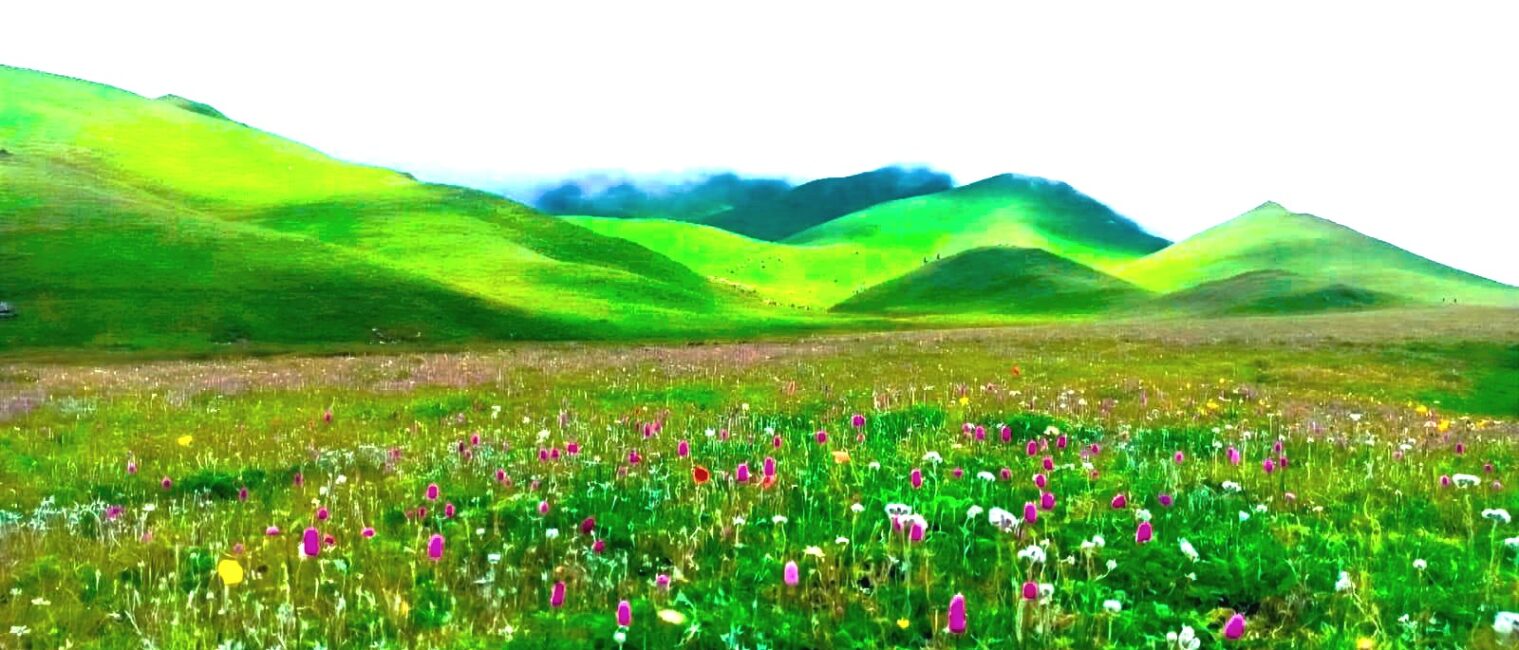
Commonly described as the “Green Carpet” of Nepal, the Alpine Meadows of Bajura are the visual heart of this trek, which feels and looks like a series of green fields.
Different from the jagged rocks of the Everest region, the landscape here consists of endless, undulating hills of green grass. These “Patans” stretch toward the horizon in a way that feels surreal, offering soft, velvet-like terrain that is a dream for both trekkers and photographers seeking the “Untouched Wilderness” aesthetic.
Dhangadi, the word means “The fort of Jewels”, as it serves as a “ Gateway to the far West where the humid, Sub-ropical plains meet the first whispers of the Himalayan foothills.
As the primary logistic hubs for the expeditions to Badimalika, Khaptad and Mount Api, it offers a final test of urban comfort from high-speed Wi-Fi to an air-conditioned hotel before you vanish into the rugged wilderness.
Beyond its role as a transit point, the city is a cultural treasure trove, famously being the heartland of the Rana Tharu community, whose very traditional attire and unique mud-walled world architecture offered a striking contrast to the mountain culture you encountered later.
Whether you are exploring the serene wetlands of Jokhar Tal, bird watching along the Mohana River or visiting the quirky aircraft museum housed in a decommissioned Fokker 100, Dhangadhi captures “ Frontier Energy that makes it much more than just a stopover; it is the essential jumping point where the modern world ends and your authentic Himalayan journey begins.
The horizon is dominated by the white peaks of the Api and Saipal ranges, massive in scale. These are the giants of the Far Western Nepal, and seeing them ignite in the shades of the gold during the high-altitude sunrise is a highlight that rivals any other view in the nation. To the north, the gaze extends even further, offering a rare glimpse into the rugged, mysterious Tibetan Plateau.
The Triveni Dham is an ethereal plateau where three holy rivers meet, creating a misty sanctuary that feels suspended in time.
It serves as a vital campsite and a place of deep cleansing rituals for pilgrims. Whether it’s filled with thousands devoted during the Journey Purnima Festival or standing in total silence during the off-season. The energy of this sacred conference is a core part of the Badimalika identity.
Trekking through this region is not just a regular journey; it’s a walk across a living sanctuary. The trail goes through the calm, ancient forests of the Khaptad National Park buffer zone, where the world’s noise is replaced by the call of the Himalayan Monal (Danfe).
From the colourful blooms of the wildflowers in the monsoon to sightings of Musk deer, the raw biodiversity here is a testament to one of the few truly unbothered ecosystems left in the Himalayas.
In the Far-West culture, it isn’t just performance for tourists, but a way of life. This trek offers a rare opportunity to immerse yourself in the Khas Heritage.
You’ll witness the rhythm of the Deuda dance, listen to the oral folklore passed down through generations, and experience “Atithi Devo Bhava” (the guest is god) in the purest form. Staying in these remote villages offers a glimpse into a traditional lifestyle that remains unchanged by mass tourism.
And how can we forget the Natyashwori Temple, an architectural gem dedicated to the “Goddess of Dance.” The temple is famous for its open courtyard and intricate wood carvings that showcase the ancient Khas-Malla artistry.
Local legend says that Goddess Badi Malika truly listens to the prayers of those who descend to pay their respect at the Natyshwori immediately after reaching the peak.
It serves as an emotional and cultural softening of the trek. After days of battling thin air and steep bridges, walking into the vibrant, ritual-filled atmosphere of this temple feels like a homecoming.
It is here that you truly see the Deuda culture in action, with pilgrims and locals often gathering in the courtyard for traditional songs and dances that have remained unchanged for centuries.
High in the remote hills of western Nepal, Badimalika Temple is not just a destination; it feels like a journey into something older, quieter, and a little mystical. The best time to visit depends on what kind of experience you want, because this place changes its personality with the seasons.
As the winter loosens its grip, the trail of Badimalika slowly comes alive. The air feels fresh and gentle, neither too cold nor too warm, making the long trek more comfortable. Hills that once looked dry begin to glow with softer greens, and scattered wildflowers add bursts of colour along the path.
There’s a calmness in spring, fewer travellers, quieter trails and a deeper sense of connection with nature. The sky is usually clear, giving you wide open views of the surrounding landscape. It’s the kind of season where you can walk for hours and hear nothing but the wind and your own footsteps.
This is the perfect time if you want solitude, reflection, and those peaceful moments. They are also meditative travel moments.
After the monsoon, rain washes away the dust and haze, and autumn reveals Badimalika in the sharpest, most breathtaking form. The skies turn a deep, endless blue, and the mountain appears crisp and directly defined, as if someone just adjusted the contrast of the entire landscape.
The weather is stable, with cool mornings and pleasantly warm days ideal for trekking. Every viewpoint feels like a reward, offering panoramic scenes that look clear. This is when the region feels almost complete, as if nature itself is showing off.
In August, Badimalika transforms completely. What is usually a quiet and remote trail becomes alive with thousands of pilgrims making their way to the temple. This is the time of the grand festival around Janai Purnima, when devotion fills the mountain.
The journey becomes more than just a trek. It turns into a shared spiritual experience. You have a group. Chanting, caring offerings. And pushing through the different terrain with unwavering faith. At the temple, rituals, prayers and traditional practices create an intense and powerful atmosphere.
About nature, its own challenge. Monsoon rain makes the trail muddy and slippery clouds roll into unpredictability. And the journey demands more physical and mental effort.
This is the time to go if you want to witness the culture, faith and raw human determination at its peak.
Winter at Badimalika is not just quiet, it’s unforgiving as temperatures drop below the freezing point. The entire region becomes wrapped in snow and icy winds. That trail that was once visible disappears beneath a thick layer of snow, making navigation difficult even for those who know the route well.
The cold air is just uncomfortable; it bites. Strong winds sweep across the open highlands, making the temperature feel even harsher.
Water sources freeze, and the basic resources become scarce. Villages along the route grow quieter as fewer people travel, and the sense of isolation becomes very real.
Snow-covered landscapes do create a stark, almost haunting beauty. The mountains look untouched and frozen in time. There is a deep silence that feels powerful- no crowds, no movement, just vast white terrain stretching endlessly.
Since we’ll be at an altitude of around 4,200 meters, the point and temple lie in a high altitude zone where the oxygen levels are significantly lower than sea level.
This reduced oxygen pressure affects breathing, stamina and overall physical performance. Even experienced trekkers feel the difference as the body works much harder to perform the basic activities like walking, uphill or carrying loads. Understanding elevation is the foundation for preparing both physically and mentally for the journey.
So as the altitude rises, the air becomes thinner, meaning each breath contains less oxygen. At Badimalika’s elevation, your lungs and heart must work overtime to supply oxygen to muscles and organs. This leads to faster breathing, increased heart rate and quicker fatigue. The body gradually adapts by producing more red blood cells, but this process takes time, which is why sudden ascent can cause problems.
So Acute Mountain Sickness is the most common issue faced at high elevations like this. It usually begins with mild symptoms such as headache, dizziness, nausea and loss of appetite. These signs often appear within the hours of gaining altitude and can worsen if ignored.
While AMS is generally manageable, recognising all the symptoms is crucial to prevent escalation into more severe conditions.
In rare cases, altitude sickness can develop into serious conditions like high altitude pulmonary edema (HAPE) and high altitude cerebral edema (HACE), which affect the lungs, causing breathlessness and fluid buildup. While HACE impacts the brain, leading to confusion, poor coordination and unconsciousness, these conditions are life-threatening and require immediate descent and medical attention.
Acclimatisation is the body’s natural way of adjusting to the reduced oxygen levels. It involves gradual exposure to higher altitudes, allowing the body to adapt without stress. This process includes increased breathing rate and improved oxygen efficiency. Taking rest days, ascending slowly and avoiding rapid elevation gain are key strategies for proper acclimatisation during the Badimalika trek.
Many altitude-related problems arise from avoidable mistakes, such as ascending too quickly, ignoring symptoms or pushing physical limits. Alcohol, smoking and dehydration further increase the risk of AMS. Overconfidence is another major factor. Trekkers often underestimate altitude because the trail itself may not seem technically difficult. Respecting the mountain environment is critical for safety.
Medications like acetazolamide can assist in preventing altitude sickness by helping the body acclimate faster. However, they should be used with proper knowledge and not as a substitute for safe trekking practices. Preventing measures such as low ascent hydration and monitoring symptoms are always more reliable than medication alone.
While altitude affects everyone differently, good physical fitness improves endurance and recovery during the trek. Cardiovascular strength, stamina, and prior trekking experience can make the journey smoother. However, fitness alone does not prevent altitude sickness, so preparation must include both physical training and awareness of the altitude risk.
The most important role at high altitude is simple. If symptoms appear, descend immediately. Delaying action can lead to serious health risks. Trekkers should always stay aware of their conditions, communicate with companions and avoid trekking alone in the remote regions like Badimalika, which is the far-western region of Nepal. Access to medical help is limited, so making self-awareness and quick decisions is essential.
Badimalika Temple lies in the Bajura district, far-western Nepal, at a high altitude.