 trek
 Annapurna
 Base Camp Heli Tour: Fly into the Annapurna Sanctuary in a day
1 day 4,130 m Moderate
From$499
View trip

Annapurna Circuit Trek is an adventure where the walk takes around a massive range of Annapurna Himalaya from North to Southern green area, a great scenic country where trekkers will be captivated by a high mountain that surrounds you. Annapurna Circuit Trekking is a perfect…
Annapurna Circuit Trek is an adventure where the walk takes around a massive range of Annapurna Himalaya from North to Southern green area, a great scenic country where trekkers will be captivated by a high mountain that surrounds you.
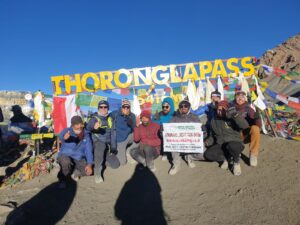
Annapurna Circuit Trekking is a perfect mountain holiday listed as world’s Top Ten Adventure Destinations by leading well-known Travel magazines and guidebooks. You can find it yourself joining magnificent walks to the high and scenic Manang Valley with a climb to the Thorang-la pass to achieve and experience the highest altitude gain.
Annapurna Circuit is certainly a journey that takes you around most scenic places with varied landscapes and climates, from low, warm farmland to high, cooler green hills, then reaching close to remorseless fields of ice and glaciers at the high Manang Valley.
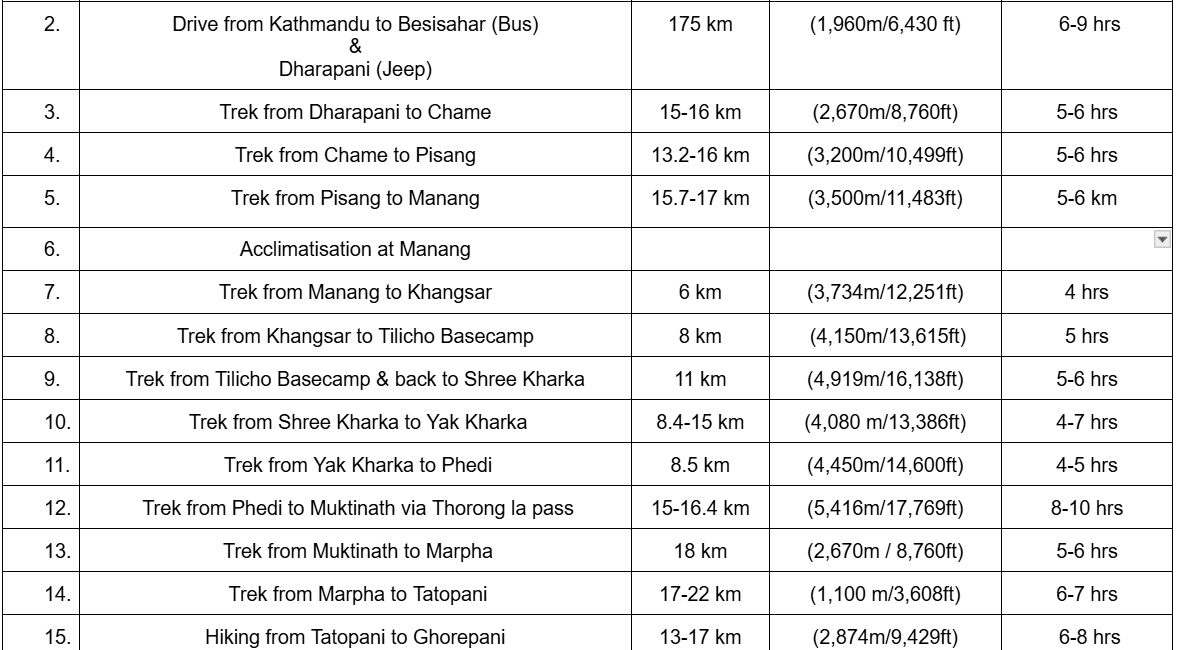
The adventure begins with exciting overland travel on the busy and interesting Nepal main highway, then diverts towards the Annapurna Circuit route at Besisahar town. The route circles low, warm areas of Nepal’s Mid-West, where the walk follows the raging Marsyangdi River upstream towards higher hills.
Walking around nice villages with fabulous views of Manaslu and Annapurna peaks to reach Dharapani village, to Chame, a large town and headquarters of Manang district, where the air gets much cooler with close mountain views.
The journey continues heading into the lovely alpine woodland of tall rhododendron and pine trees with a climb and descent to enter beautiful Manang valley at Pisang village, where you will be surrounded by views of the high peaks of Annapurna and Chulus with Pisang peak.
From Pisang onward within the scenic Manang high valley encircled by high peaks, a walk leads to visit the interesting monastery of Braga and then reach at main Manang village with the remaining days for acclimatisation and to explore the local villages of an immense culture of colourful Buddhist heritage.
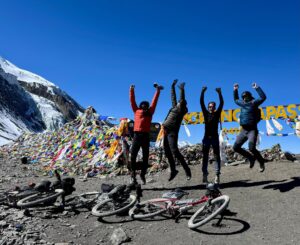
After a pleasant and wonderful time at Manang walk leads to the remote west, close to a mountainous area with the climb to the high Thorang-la pass at 5,416 m, facing breathtaking scenery of surrounding landscapes and giant peaks.
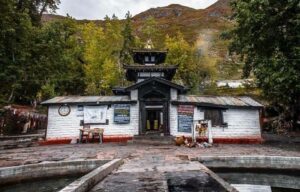
Enjoying super views descend to Mustang area at Muktinath, a holy pilgrimage spot for Hindus with views of Dhaulagiri, Nilgiri’s a nice village within a weather-beaten country where the adventure leads to wide Kaligandaki River valley to Jomsom, a headquarters town of Mustang area and the hub for Thakali people a tribe of Kaligandaki valley.
The journey continues following the Burigandaki River downstream to a lower warm area after going through the world’s deepest gorge, Kaligandaki River, sandwiched between the giant peaks of Dhaulagiri and Annapurna.
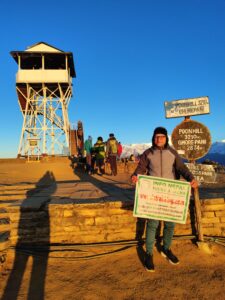
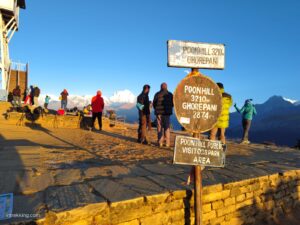
Fascinating scenery with a great change in altitude and landscapes on reaching Tatopani village, a place with a natural hot spring, as the village is called Tatopani means hot water in Nepalese. A perfect place to enjoy refreshing moments before heading back to cooler high hills at Ghorepani a village located in a rhododendron forest famous for Poon Hill where a short hike takes you early morning for spectacular sunrise views over an array of Mid and Western Himalaya peaks.
Slowly, our adventure comes to an end with a much downhill walk to reach the end of our trek at Bhirethati village, where a short drive takes you to the beautiful city of Pokhara, a leading and renowned tourist place in the whole Himalayas. A wonderful place, Pokhara is blessed with mountains and lakes, where our amazing experience and adventure Annapurna circuit, concludes with grand memories of high hills and mountains of Nepal’s high Mid-West Himalayas.

From March to May and September to November months of the year, where March to May are longer days with many sunlight hours till late afternoon, with clear days for excellent views of snow-capped peaks and pleasant walks, can get cloudy with light rains and can snow on higher elevations sometimes.
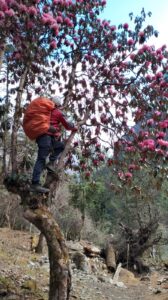
March to May, when hills are alive with seasonal wildflowers in bloom, especially rhododendrons of various species from tall trees to the bush, September to November is another best time for clear views of peaks and walks, but shorter days and sunlight hours due to the autumn or fall season. Much colder nights and mornings, including around shade, can have snow sometimes around higher hills with more freezing temperatures.

Best Alternative Treks
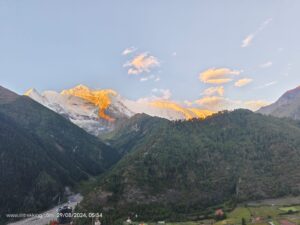
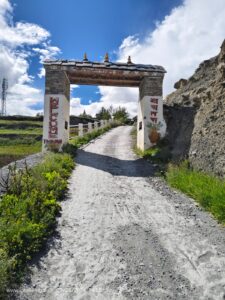
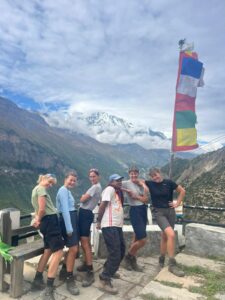
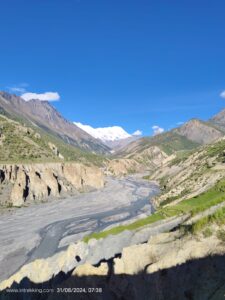
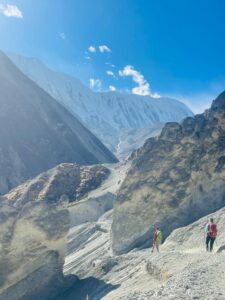
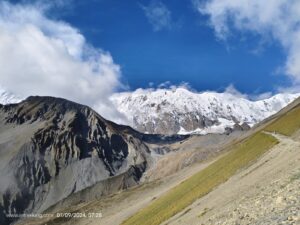
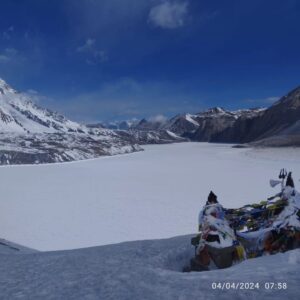
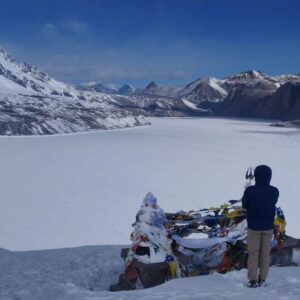

The realities of this route, told straight, so nothing surprises you later.
The trek’s high point is the Thorong La pass at 5,416m, with a night at Thorong Phedi or High Camp (4,900m+) before the crossing. The circuit’s gradual ascent from low valleys gives your body good time to adapt, but the pass day is long — typically a 3–4am start, 7–9 hours of walking, and freezing pre-dawn temperatures. We build in an acclimatization day in Manang, and your guide monitors everyone for AMS symptoms. If needed, descent always takes priority over the itinerary.
A jeep road now runs along parts of the traditional route, especially in the lower Marsyangdi and Kali Gandaki valleys. We use NATT side trails wherever possible to keep you off the road and on quiet village paths, and we may use jeep transfers to skip the dustiest road sections so your trekking days stay scenic. Expect some road walking regardless — it’s part of the modern circuit.
Unlike Everest treks, there are no weather-dependent mountain flights here. Access is by road from Kathmandu or Pokhara — long drives (6–10 hours) on winding, sometimes rough mountain roads, with jeeps used for the final stretches. Landslides in monsoon season can occasionally cause delays or route changes, so keep at least one buffer day before your international flight.
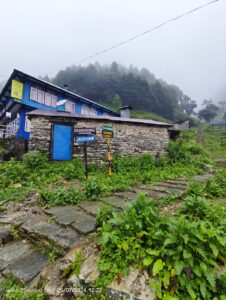
The Annapurna Circuit has some of Nepal’s best teahouse infrastructure. Villages like Chame, Manang, and Jomsom offer good rooms, varied menus, bakeries, and hot showers. Around Thorong Phedi and High Camp, expect basic dorm-style rooms, shared toilets, and very cold nights — a four-season sleeping bag is essential. Hot showers and charging cost extra as you climb.
Standard travel policies exclude high-altitude trekking. Yours must explicitly cover trekking to at least 5,500m and helicopter evacuation — the only realistic rescue from the Thorong La area. Check the altitude clause in the fine print before you fly; we’ll ask for proof of coverage before the trek starts.
| Item | Typical price | Note |
|---|---|---|
| Hot shower | NPR 300–800 | Gas or solar showers common up to Manang; bucket shower near the pass |
| Device charging | NPR 500 | ften free in lower lodges if you eat there; paid above Manang |
| Wi-Fi | NPR 500 | Many lodges offer free Wi-Fi; NTC/Ncell data works in much of the valley |
| Safe drinking water | NPR 60–200 | Use ACAP safe-water stations to refill cheaply and skip plastic bottles. |
| Tea/coffee | NPR 100–400 | Manang's bakeries are worth the splurge |
| Soft drink / beer | NPR 300–700 | Prices peak around Thorong Phedi |
| Snacks / chocolate ba | NPR 150–400 | Cheapest stocked up in Besisahar or Chame |
Altitude/ elevation sickness, also known as acute mountain sickness (AMS), occurs when you ascend to high altitudes too quickly and your body struggles due to a lack of adequate oxygen. It typically affects people after ascending beyond 2500 metres (8,200 ft) and can escalate if ignored.
Symptoms usually begin 6-24 hours after ascent and to help control the situation can range from mild to life-threatening. It’s crucial to recognise early signs to take the situation under control.
Note: If you are under regular medication then please bring an adequate amount of medication to avoid shortage as some medications might not be available in the trial.
Also, have enough quantity of Nepali money in smaller denominations for personal expenses despite the availability Atm at times might not function properly.
The company provides you with three meals including breakfast, lunch and dinner while on route for the Annapurna circuit trek enough to sustain and provide you energy to keep going forward, but does not provide you with extra energy bars, chocolates and refreshing drinks while trekking including mineral water bottles rather provides you with refill if you have a tumbler and if you want a mineral water bottle than you are supposed to purchase one for yourself and in case if you want to buy sealed mineral water along with other snacks it’s advisable for you to buy at a lower elevation as the price inclines with rising elevation.
Drinking water will be available for you throughout the trek in different local shops to buy and refill at tea houses but it’s advised for foreigners to buy mineral water bottles or at least boil the drinking water as the water straight from the source might not settle well with their physiology due to new environment despite the water being clean and drinkable.
There are different methods to obtain water to drink as follows:
The most convenient way to get water is to buy bottled water available easily at local vendors. It’s advised for you to buy water at lower elevations if you want to save costs, as the price of bottled water spikes with rising elevation. A bottle of water costing Rs. 100 at Lukla might cost Rs. 400+ in Gorakshep.
Most tea houses offer boiled water for a small charge, but getting the boiled water is worth it cause it’s safer from untreated water and since usually the region is visited during cold weather, it’s advised to avoid drinking cold water to avoid the body from losing heat and energy.
Water from these sources is available to drink but just like suggested before, it needs to be processed through some sort of viable treatment in order to filter pathogens.
There are several purification methods that travellers can use for water purification besides the mentioned ones, which can be useful even in times of emergency, particularly for solo adventure travellers to know about them, such as:
Beginners who are planning to do the Annapurna Circuit trek must be aware that you should have good physical and mental strength as the route is challenging and the high altitude with mountain pass makes this route more adventurous. You should consider having enough preparation and consultation before departing for this trek. Apart from that a suggestion for first-time high-elevation trekkers, it’s better if you do better fitness training and exercise and weight-bearing training as the trail is beyond 8000 m and requires a good level of strength and endurance of cardio.
Power supply on the trail is available on the and charging facilities are available at teahouses for minor charges for communal charging services. But since it’s a high altitude beyond and around 4,500m the weather might be unstable at times causing power outages due to winds. So, it’s advised you bring power bank for charging your devices on the go.
As for the internet, the teahouse offers wifi services but just like electricity it might be affected by altitude and weather at times. So it’s better if you subscribe to internet packages or you can even acquire E-sim for internet services that come with the internet acquiring process.
As for the sim card if you want a physical sim you’ll need to provide a passport copy and a PP-sized photo to the retailer Service provider and as for the e-sim you can visit the official site of any cellular service provider and acquire the E-sim as per the instructions and as for the data acquiring process, you’ll get small manual with the sim card paper which you can use to follow the process of data purchase.
Note: Anyone who needs to be under regular medication, please bring an adequate amount of medication while on the route and also have insurance in case of emergency evacuation by helicopter.
TIPS: For Trip Enhancement better to have a Guide/Porter.
The Annapurna Circuit trek is a popular long-distance trade in Nepal that circumnavigates the Annapurna massif, offering diverse landscapes, cultural experience and stunning mountain views.
Based on the itinerary, the trek itself spans approximately 15 days of hiking, with a total duration of 17 days, including arrival, departure, and travel days.
The best time to do the Annapurna circuit trek is generally during the spring (March to May) and Autumn (September to November) season offering clear skies, moderate temperatures and stable weather conditions.
The trek is considered moderately challenging to sternous due to high altitude, Long working days and steep ascents and descents, Particularly around Thorong La Pass. Good physical fitness and preparation are recommended.
The highest point reached on this itinerary is Thorong La Pass at 5146m (17,769 ft)
Yes, Altitude sickness is a significant concern due to the high elevations reached. The itinerary includes acclimatisation days in Manang to help mitigate this risk.
Symptoms can include headache, nausea, dizziness, loss of appetite, fatigue and shortness of breath. It is crucial to monitor yourself and your trekking partners for these signs.
Preventive measures include ascending gradually, taking acclimatisation days, staying hydrated, avoid.Alcohol and smoking and listening to your body. “Climb high , sleep low” principle is also important.
Mild symptoms can often be managed with rest and hydration. For worsening symptoms, descending to a lower altitude is the primary treatment. In several cases, medical assistance should be sought immediately.
Accommodation is primarily in tea houses or guest houses, which offer basic but generally comfortable rooms with beds and blankets. Single and double rooms are usually available.
Common meals include Nepali staples like Dal Bhat (Rice, lentils and vegetables), Noodles, pasta, momos (dumplings) and Various soups and bread. Western dishes are also often available.
Most tea houses maintain reasonable hygiene standards, but it is advisable to choose freshly cooked meals and over raw or undercooked foods carrying hand sanitiser is recommended.
Vegetarian options are widely available. Vegan and gluten-free options may be more limited, especially in remote areas, so it’s best to inform your guy or tea house owners in advance.
Yes, bottled water is available in most city houses and villages, But since it contributes to plastic waste, using water purification tablets or water filter is more sustainable option and is recommended.
Essential items include sturdy hiking boots, Warm layers (fleece, down jacket), Waterproof and windproof outerwear,Trekking poles, a sleeping bag depending on the season and the teahouse, blankets ahead, lamp or sunscreen, sunglasses and first aid kit and other personal toiletries.
While tea houses provide blankets, bringing your sleeping bag (appropriate for temperature rating) is highly recommended for warmth and hygiene, especially at higher altitudes.
Yes, trekking poles can be significantly helpful with balance. Reducing strain on your knees during essence and distance and improving overall trekking efficiency.
Ideally, your backpack should weigh no more than 15% to 20% your body weight to minimise the strain. Porters can be hired to carry the bulk of your luggage.
While it’s possible to trek independently, hiring a guide or Porter is highly recommended for safety, navigation and supporting the local economy. Regulations may also require a guide in certain areas.
Cost vary depending on the level of service (guide vs independent, porter, accommodation quality), but budget for the permits, transportation, Accommodation, food and potential Gear rental. A guided trek with Porter can range from $50-$100+ per person per day.
You typically will need to permit: Annapurna Conservation area permit. (ACAP) And the Trekkers information management system (TIMS) Card.
Permits can be usually obtained in Kathmandu or Pokhara before starting your trek. Your trekking agency can often assist you with this process.
The Nepalese rupee NPR is the local currency. While some larger establishments may accept cards, it’s essential to carry enough cash for meals, accommodation and other expenses, especially in more remote areas. ATM’s are available in larger towns like Besisahar, Jomsom, Manang, but reliability can variety.
The Annapurna region is safe for trekking, However, it’s essential to be aware of potential risks such as altitude sickness, landslides, especially during monsoon and the trail conditions. Trekking with guide enhances safety.
A basic first aid kit should include bandages, antiseptic wipes, bin relievers, blister treatment, diarrhoea medication, altitude sickness medication (if prescribed by the doctor), and any personal medications.
Yes, comprehensive travel insurance that covers medical emergencies, evacuations including helicopter rescue for altitude sickness, and trip cancellation is highly recommended.
The region is culturally diverse with various ethnic groups including Gurung, Magar, Tamang and Thakali, Each with their unique customs, traditions and languages. Buddhism and Hinduism are the predominant religions.
Dress modestly, especially when visiting religious sites. Shoulder and needs should be generally covered. Ask for permission before taking photos of people.
Use the right hand for eating and receiving things. Avoid pointing with a single finger use your whole hand. Removing your shoes before entering homes and religious sites is customary.
Trekking itineraries are often flexible and your guides will make necessary adjustments for your safety. This might involve de delays, alternative routes or returning to the lower elevation if conditions become hazardous having some buffer day in your overall travel plan is advisable.


4.9 from 90+ Google reviews
Our overall Google Business rating Annapurna  Annapurna
 Annapurna
Trip: Annapurna Circuit Trek
Operator: Info Nepal Tours and Treks, Thamel, Kathmandu
Region: Annapurna Region, Nepal
Duration: 17 days
Maximum altitude: 5,416 m
Difficulty: Moderate
Group size: 1-10 people
Price from: $1,280 per person (USD)
Best season: March–May : September–November
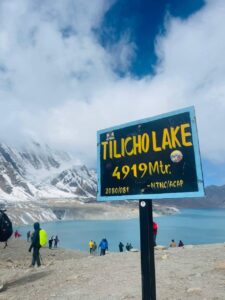
Summary: A circuit around the Annapurna massif crossing the Thorong La pass, with side trips to Manang and Tilicho Lake, passing through changing landscapes from warm farmland to glaciers, suited to trekkers wanting varied terrain and culture.
Overview: Annapurna Circuit Trek is an adventure where the walk takes around a massive range of Annapurna Himalaya from North to Southern green area, a great scenic country where trekkers will be captivated by a high mountain that surrounds you. Annapurna Circuit Trekking is a perfect mountain holiday listed as world’s Top Ten Adventure Destinations by leading well-known Travel magazines and…
Itinerary outline: Day 1 Arrival in Kathmandu and transfer to hotel.; Day 2 Drive to Besisahar (microbus) & Dharapani (shared jeep); Day 3 Trek to Chame; Day 4 Trek from Chame to Pisang; Day 5 Trek to Manang; Day 6 Acclimatization at Manang; Day 7–end
Includes: International and domestic Airport pick-up and drop by private car., Meals on a full-board basis (Breakfast, Lunch, and Dinner/ the main course) during the trek in the mountain., An experienced and Knowledgeable English-speaking Govt. registered trekking guide., All Food, Accommodation, Insurance, and transportation for the guide., Annapurna Conservation Area permit, TIMS card (Trekking Information Management System), Trekking equipment such as the Sleeping bag, down jacket, etc. on return basic, Trekking lodge (Tea House) throughout the trek.
Not included: Nepal entry visa fee (you may easily issue the visa on arrival at Tribhuwan International Airport – Kathmandu)., Extra accommodation and meals behind schedule, Extra drinks as alcoholic & non-alcoholic, Surplus luggage charges for domestic airport, Additional costs by out of management control due to the landscape, weather conditions, illness, change of government policies, strikes, physical conditions, etc., Personal expenses such as snacks, laundry, telephone, wifi, hot shower, etc.
Contact: +977 9841936940 · contact@intrekking.com · WhatsApp
