- 16
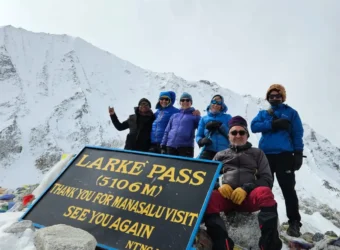
- 5,460 meters (17,913 ft) at Sangda la pass
If you’re seeking solitude and peace for your soul, the Upper Dolpo-Jumla to Jomsom trek might be the right option for you. It is a raw, high-altitude odyssey through what is arguably the last frontier of pure Tibetan culture in Nepal. This 25-day route doesn’t just visit the Himalayas; it buries you in them.
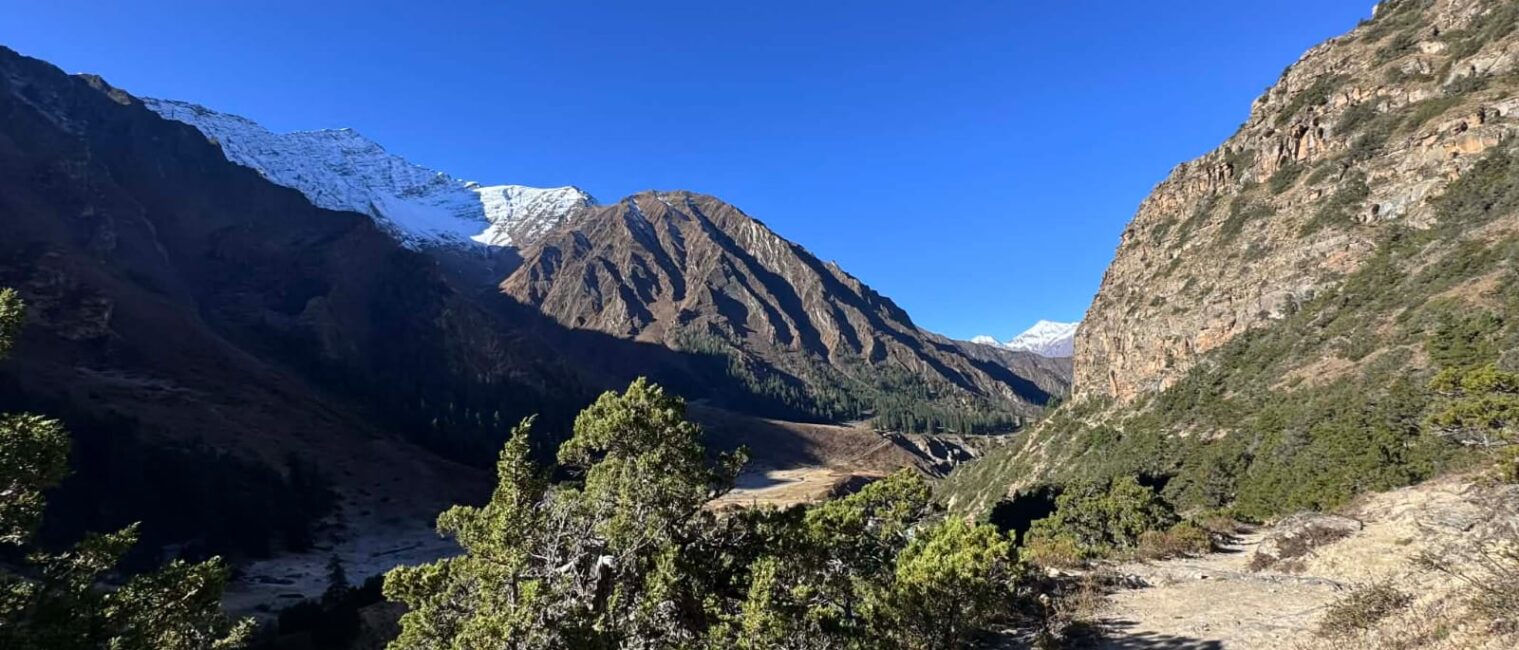
We start in the apple orchards of Jumla, but the scenery shifts quickly. You would leave the green behind for the stark, wind-carved landscapes of the Shey-Phoksundo National Park.
The centrepiece of the first half is the Shey Phoksundo Lake, a body of water so blue it looks artificial against the grey limestone cliffs. But the real challenge lies ahead in the high passes. You’re not just crossing one pass; you’re tackling a sequence of 5,000m+ giants: Kagmara La, Baga La, Numa La, and Sangda La.
This is a camping trek in the truest sense. You’ll stay in places like Dho Tarap, one of the highest human settlements on Earth, where the Bon-Po traditions have remained untouched by modern influences.
The close-up views of the deepest lake in Nepal are famous for its supernatural turquoise waters and the dramatic limestone cliffs that surround it.
Test your limits by crossing four massive high-altitude passes: Kagmara La, Baga La, Numa La and Sangda La, all exceeding 5000m (16,400 ft)
The visit to Dho Tarap, one of the world’s highest settlements, where the pre-Buddhist Bon-Po religion and traditional Tibetan lifestyle remain untouched.
A walk through the largest and most remote National Park of Nepal, sheltering the elusive snow leopard, blue sheep and Himalayan Griffons.
A dramatic shift from the lush green forest of the West to the arid, lunar-like landscape of the Tibetan rain shadow.
The challenging Great Himalayan trail to complete trekking the entire Dolpo region from West to east.
The conclusion of Wilderness’s journey is dropping into the sandstone canyons of Mustang before reaching the hub of Jomsom.
Touchdown at Tribhuwan International Airport. After the chaotic charm of Kathmandu’s streets, we’ll transfer you to your hotel. The evening is for the gear check and a detailed briefing on the 25 days ahead.
A day of “organised chaos.” We visit the ancient stupa of Swayambhunath (Monkey Temple) and the Hindu Shrines of Pashupatinath. We’ll end the day with a welcome dinner, introducing you to authentic Nepali flavours before heading into the mountains.
We swap the hills for the humid Terai plains. A 55-minute flight takes us to Nepalgunj, a bustling border town near India. It’s a stark contrast to the Himalayas, but a necessary staging point for the remote flights to the west.
A dramatic morning flight lands us on a short mountain STOL (Short Take off & Landing) strip in Jumla. After meeting our crew and porters, we began trekking through Alpine pastures and pine forests, following the Tila Khola to reach the beautiful meadows of Gothi Chaur.
The majority of our accommodation during the trip will be in the teahouse onwards.
The trail follows the river upstream, passing through a high-altitude Khas village where life remains largely agricultural. We climb steadily through forests of Birch and rhododendron until we reach the stone-built village of Churta.
Our first major test. The ascent to Mauria La is steep but rewarding, offering a panoramic view of the Bheri River valley. We then drop down through the dense cedar and pine forest to the Riverside settlement of Kaigaon.
A cultural day. We walk through the lower Bheri Valley, passing through traditional religions and terraced fields. The area is rarely visited by foreigners, offering a glimpse into the raw, rural life of Midwestern Nepal.
We enter the Shey Phoksundo National Park today, and the trail follows the Jagdula, moving deeper into the wilderness. The air gets crispier, and the vegetation begins to thin as we approach the higher altitudes.
Ascend through the alpine scrub and stark limestone walls following the Garpung Khola upstream. This wilderness campsite serves as a vital.
At the base of the high passes. The thin air at 13,123 ft provides a quiet, high-altitude sanctuary before the first major crossing.
Conquer a gruelling climb over loose moraine to reach the prayer flag-strewn summit at 16,871 ft. Take in a 360° panorama of Kanjiroba massif before a sharp descent into a glacial valley. Camp at Daju, a high-summer pasture where the landscape shifts toward an arid Tibetan aesthetic.
Pass through the ancient Bonneville is a pungi to reach the turquoise heart of Shey Phoksundo. Navigate the devil’s Trail, a narrow path carved directly into vertical cliffs high above the water.
Rest by the deepest lake in Nepal, a supernatural blue gem surrounded by grey limestone peaks.
Leave the league behind for safety. Relentless climb toward the inner sanctum of the Dulpur region. The last version disappears, replaced by a high altitude world of ochre and jagged rock.
Settle into base camp at 14,649 feet to prepare for back-to-back crossings of two massive passes.
Cross the ”Gateway to the inner Dolpo” at 17,027 feet for the incredible view of the Dhaulagiri range. Transition into the Himalayan rain shadow, where the geology turns into spectacular desert canyons. Descend into a high altitude void to reach Numa la Base camp situated at Numa La BC 14,563 ft.
Crest the highest point in central Dolpo at 5,318m/17,447 ft, overlooking the rolling hills of Tibet. A long, rewarding descent leads into the wide Tarap valley, a landscape frozen in time. Arrive at Dho Tarap (4,040m/13,255 ft), one of the highest permanent human settlements on the planet.
Spend the recovery day exploring ancient Bon Po monasteries and architecture. Observable cultural life revolves around air caravans and higher due to bulk with farming.
This high plateau village offers a rare glimpse into the Himalayan way of life that remains untouched.
Leave the civilisation of Tarap and head into the vast, empty spaces between the mountain ranges. Follow the Barbung Khla through narrow gorges and open riverbeds where no permanent settlements exist.
Set up a true wilderness camp at 14,862 ft, tucked away in a rocky crevice beneath a high pass.
Climb a steady, rhythmic ridge to cross the Charkha La at 16,141 ft before descending to the plains. Reach the walled outpost of Charkha Bhot, the last bastion of pure Dolpo culture in the east. The white-washed stone houses and ancient chortens stand as silent sentinels in the high desert.
Traverse the high plateau across prime snow leopard territory and rolling ridges of blue sheep. The trail moves through a barren, lunar-like landscape where the sense of isolation is absolute. Camp at 15,584 ft, offering some of the unobstructed views of the Dhaulagiri range.
Tackle the highest and most difficult pass of the journey, reaching an immense 17,913 ft., gaze down into the Kali Gandaki valley, marking the final exit from the remote Dolpo wilderness. Make a steep technical descent to Sangda Phedi, having conquered the trek’s ultimate physical hurdle.
Drop down from the high passes into a spectacular landscape of red and orange sandstone cliffs. The geology shifts toward the Mustang style as you reach the quiet, rugged outpost of Sangda.
At 12,172 ft, the air begins to thicken, providing a welcome change after weeks in the high wild.
You’ll be part of a scenic ridge walk with front row seats to the Nilgiri and Annapurna massifs. Follow the path above the Kali-Gandaki gorge, the river that carves the deepest gorge in the world.
Arrive at Dangarjung, a traditional settlement that serves as the doorway to the Mustang district.
Follow the wind-whipped riverbed of the Kaligandaki River into the Kaligandaki into the bustling mountain hub of Jomsom. After 20 days in the wilderness, the return to the shops and lodges feels like a surreal luxury.
Celebrate the competition of a massive 240-kilometre traverse with the final group dinner at 8,924 ft.
Take a thrilling morning road trip through the deepest gorge in the world beside two 8000-meter peaks. Upon reaching the lush lakeside greenery of Pokhara, indulge yourself to relieve from the weariness of the journey by taking a hot shower and well-earned relaxation. Swap the dry high-altitude desert for the tropical comfort of Nepal’s most beautiful city.
Board a private vehicle for the scenic journey back to the capital via Prithvi Highway. Follow the Trishuli River as the landscape transitions from high hills back to the urban valley.
Enjoy your farewell evening in Kathmandu, reflecting on one of the toughest treks in the world.
Transfer to the airport for your international flight, marking the end of a Himalayan Odyssey. Leave with the pride of having crossed the most remote frontier of the Great Himalayan Trail.
Carry home memories of high passes, turquoise lakes and the ancient spirit of the Dolpo region and memories of the warm hospitality of the Dolpo people.
Flight (Kathmandu-Nepalgunj- Jumla)
Permits (Upper Restricted Area Permit, Lower Dolpo Restricted Area Permit, Annapurna Conservation Area Permit (ACAP)
All meals ( Breakfast, lunch, dinner)
Dining/sleeping Tents
Sleeping bag (4-season sleeping bag rated to -20°C)
Insulated sleeping pad
Solar Powerbank (30,000mAh)
Headlamp
Duffle bag
Guide/porter’s salaries
Insurance (Only Guide and Porter included)
Nepal Visa fee (immigration charge)
International flights (Arrival & Departure)
Personal expenses (souvenir shopping)
Extra beverages (supplementary Drinks and foods)
Tips for the crew (Guide & Porter)
Emergency evacuation costs (Helicopter and Medical costs)
Cost: $500 USD per person for the first 10 days.
Additional days: If your Itinerary spends more than 10 days within the specific Upper Dolpo boundary, it costs an extra $50 USD per day.
Strict rule: You cannot apply for this yourself. It must be processed by a registered trekking agency, and you must be in a group of at least 2 trekkers accompanied by a licensed guide.
Since the trek usually starts in Juphal and moves through Dunai, you must pass through Lower Dolpo before entering the “Upper” zone.
Cost: $20 USD per person for each week (7 days)
Requirement: Even if you are just passing through to reach the Upper Dolpo, this permit is required for the approach and exit phases of the journey.
Since your trek ends in Jomsom, you’ll eventually cross out of Dolpo and into the Mustang District, which falls under the Annapurna conservation area.
Validity. This is a similar entry permit, valid for the entire duration you are within the Annapurna) region. From the Sangda La descent until you fly out of Jomsom)
The Upper Mustang Restricted Area Permit (RAP) is a mandatory requirement for any trekker venturing north of Kagbeni into the forbidden kingdom of Lo Manthang. With a $50 charge per day spent within the restricted zone.
Additionally, all trekkers must possess an ACAP permit and 3000 NPR to enter the Annapurna Conservation Area. Since this is a restricted frontier, these permits can only be processed through a registered trekking agency in Kathmandu before your journey begins.
Cost: $50 USD per extra day.
Requirement: 1 trekker + Licensed Guide.
Agency: Must be applied through an authorised trekking company.
Your journey begins in the historic heart of Nepal, a living museum where ancient traditions breathe in the shadow of modern life.
Before flying to the wild west, take a day to explore the UNESCO World Heritage sites from the golden spires of the meditative Bouddhanath Stupa. These sacred spaces offer the perfect spiritual grounding before you step into the remote wilderness of Dolpo.
Located in the tropical lowlands of the Terai, Nepalgunj serves as the vital transit hub for all the expeditions in the Dolpo region.
This vibrant border town offers a stark contrast to the high Himalayas with its humid air and bustling bazaars.
It is here that we finalise our logistics and prepare for the dramatic mountain flight that climbs from the plane to the rugged heart of the mountains.
Jumla is the administrative centre of the Karnali region and the official gateway to trekking adventures. Situated in a high-altitude valley famous for its red rice and organic apples, it offers a glimpse into the resilient lifestyle of the Khas people.
Setting off from Jumla, you leave the motorable roads behind and enter a world where ancient trade routes are still the only way forward.
At 3,611m, Phoksundo Lake is a sight that defies description with it’s Supernatural turquoise water framed by jagged limestone cliffs. As the deepest lake in Nepal, it is a sacred site for the local Bon-Po people nd the centre of Shey Phoksundo National Park.
Resting on its shores, you can hear the distant roar of the 167m waterfall that drains this magnificent alpine.
Stepping into the Dho Tarap feels like travelling back several centuries; it is one of the highest permanently inhabited valleys in the world. This wide, windswept plateau is dotted with white-washed mani walls and Ancient monasteries.
The pre-Buddhist Bon religion is still practised daily. It is a place of incredible resilience, where Yak caravans still traverse the high passes just as they did in the days of the salt trade.
After weeks in the deep wilderness, Jomsom greets you with the comforts of the Annapurna region and its famous daily winds. As the headquarters of the Mustang district. This town sits in the deep gorge of the Kali Gandaki River, sandwiched between the massive peaks of the Dhaulagiri and Nilgiri. It is the final destination of our trek, where we celebrate our successful traverse before catching our flight back to civilisation.
Your transition back to reality happens in Pokhara, Nepal’s Premier adventure hub, nestled beside the Phewa Lake. After the rugged dust of Dolpo, the lush greenery of the lakeside cafes offers much-needed sanctuary for recovery. With the Machhapuchhre (Fishtail) Peak reflecting in the water, it is a perfect place to reflect on the 5,000m passes you have just conquered.
In the restricted wilderness, your guide is more than your navigator. They are your link to the local Bon Po culture and your primary safety officer. We provide only government-licensed professionals with specific experience. in the Great Himalayan Trail and high altitude logistics.
They manage all permit checkpoints, monitor your health daily for AMS and ensure every pass crossing is timed perfectly with the weather.
The backbone of any Dolpo expedition is the dedicated team that manages the heavy logistics across four 5000 m-plus passes. Because there are tea houses or porters and mule trains carry everything from four-season tents to fresh kitchen supplies and your personal duffle bags.
We strictly adhere to fair play standards and provide our crew with the same high-quality cold-weather gear and insurance that we demand for our trekkers.
The Great Himalayan Trail (GHT) section from Upper Dolpo to Jomsom is the ultimate benchmark for wilderness trekking, a 25-day “high route” That traverses the most remote and rain-shadowed area of the north west. This is a grade 5 strenuous trek that covers approximately 240 km, peaking at the 5,460m Sangda La Pass and crossing at least four other passes exceeding 5,000m.
The trek is a masterclass in high altitude endurance, beginning with a dramatic mountain flight in to he Juphal airstrip (2,475m) and concluding in the windswept Kaligandaki valley of Jomsom.
The highlights of the GHT traverses are as legendary as they are rare. You will stand on the shores of turquoise Phoksundo Lake, the deepest lake in Nepal, and visit the 11th-century Shey Gompa and the spiritual heart of Dolpo nestled beneath the sacred Crystal Mountain.
The trail winds through the “Last Forbidden Kingdom,” Where you will encounter the resilient Bon Po communities of Dho Tarap, The highest human settlement on Earth, and walk ancient salt trade routes unchanged for centuries, the GHT offers a final snactuay fo the elusive Snow leopard and blue sheep, making every high pass, causing a profound encounter with the roast most untouched version of the Himalayas.
This is one of the most fascinating sides of this region. Typically, what happens is that in any trekking region, monsoon halts the steps in Nepal, which is typically around the month of mid-June to late September, and it happens nationwide.
But due to the geographical setup of the region, being a rain-shadow area caused by mountain ranges by blocking the rainclouds from crossing the boundary, this region does not experience any rainfall, even in the monsoon, which is why trekking in this region, even during the monsoon, is very favourable and appropriate.
The Pre-Buddhist Bon-Po religion is the spiritual heartbeat of the Upper Dolpo, offering a rare window into the ancient beliefs that predated Buddhism in the Himalayas, rooted in shamanism and animism. Bon-Po practitioners believe that every mountain, river and forest is inhabited by powerful spirits who must be honoured through specific rituals. This 25-day trip allows you to witness a living tradition where the sacred and the natural world are inextricably linked.
One of the most striking physical differences you will notice on the trails is the direction of ritual movement; unlike Buddhist Bon-Po followers, circumbabulate Shrines and Mani walls counter-clockwise. Their Monasteries known as Gompas. adorned with a unique iconography, blue-faced deities and ancient frescoes that have remained unchanged for centuries. In villages like Dho Tarap, the rhythmic beating of the shamanic drums and sightings of blue sheep, the sacred guardians of the Peaks, create an atmosphere of profound prehistoric mysticism.
During the trek from Upper Dolpo-Jumla to Jomsom Trek, the accommodation varies from place to place.
Starting from bigger cities like Kathmandu and Nepalgunj, the hotels are the best form of accommodation equipped with modern facilities, but with the increase in days of the trip in the regions like Kaigaon, Hurikot, Toijiem and Kagmara la, the accommodations are basic form of tea houses, whereas in the places like Baga La Base camp, Numa La Base camp, Dho Tarap, Charkha Phedi, Sangda and Dangarjong, it’ll be the tented camp accommodation.
Selecting a partner for the Upper Dolpo to Jomsom traverse requires a specialist in high-altitude logistics. We take the stress out of the complex triple flight connections and a mandatory $500 USD permit process.
With our veteran guides who are experts on the Great Himalayan Trail, we prioritise your safety daily.
We provide a premium 4-season mountain gear and -20 degrees Celsius rated sleeping bags for your sub-zero camps.
Our dedicated kitchen crews provide the high-calorie, hygienic meals necessary for 25 days of Wilderness journey.
With our deep-rooted relationship with Bon-Po communities, offering an authentic cultural welcome. By maintaining a high staff to client ratio, we offer flexible pacing required for four 5,000m+ passes. When you book with us, you are partnering with a team that treats the remote Dolpo frontier as our backyard.
Yes, a Restricted Area Permit (RAP) costing 500 USD for the first ten days is mandatory.